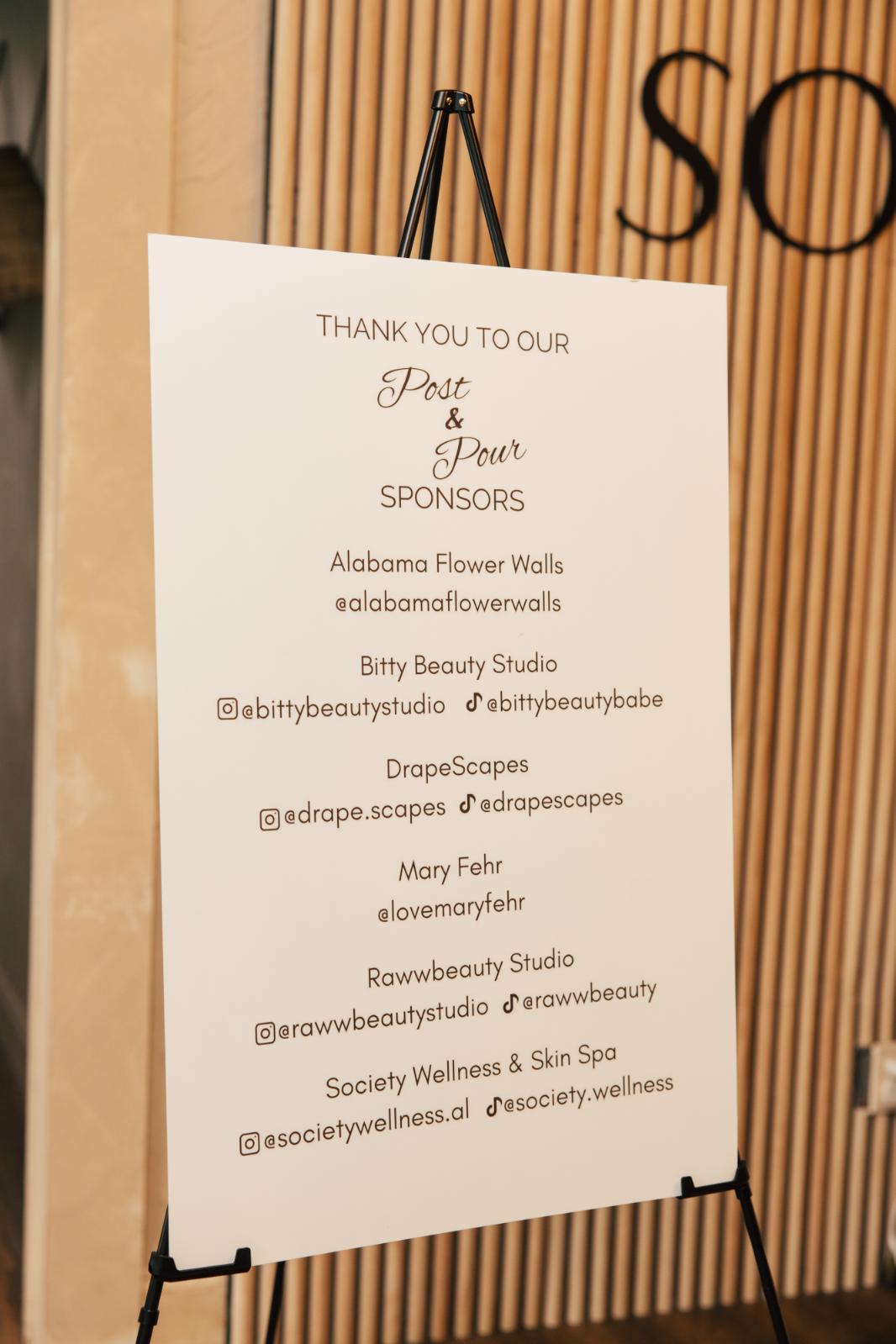
Why Vestavia Hills Chooses Society Wellness and Skin Spa for Body Contouring
In todays fast-paced world, where everyone seems to be in a hurry to achieve their best selves, its no wonder that body contouring has become a sought-after service. But why do folks in Vestavia Hills specifically choose Society Wellness and Skin Spa for this transformative experience? Well, its not just about the results (though those are undeniably impressive), but also about the entire journey that clients embark upon when they step through the spas inviting doors.
First off, Society Wellness and Skin Spa isnt your ordinary spa. Its not just about aesthetics; its about holistic well-being. The team there understands that body contouring isnt a one-size-fits-all solution-every client is unique, and their approach reflects that.
* Liberty Park
They dont just focus on the physical transformation but also emphasize mental and emotional well-being. Its kinda like a retreat for your body and soul!
One of the standout features of Society Wellness and Skin Spa is their commitment to personalized care. They dont rush you through the process or treat you like just another appointment in their busy schedule. Instead, they take the time to understand your goals, concerns, and lifestyle. This attention to detail ensures that the treatment plan is tailored to meet your specific needs. And lets be honest, who doesnt want to feel like theyre the only one that matters?
Moreover, the spa boasts a team of experienced professionals who are not only skilled in the latest body contouring techniques but are also genuinely passionate about what they do. Relaxation That Reshapes You – Society Wellness and Skin Spa in Vestavia Hills . They dont just perform procedures; they educate and guide you. This level of expertise and care creates an environment of trust and comfort, which is essential when undergoing any kind of body treatment.
Now, you might be wondering about the technology they use. Society Wellness and Skin Spa doesnt skimp on the latest advancements! They invest in cutting-edge equipment and techniques to ensure that their clients get the best possible outcomes. Whether its CoolSculpting, laser treatments, or other innovative methods, theyve got it covered. But technology alone isnt enough. Its the combination of skilled practitioners and state-of-the-art tools that makes all the difference.
Another reason why people in Vestavia Hills flock to Society Wellness and Skin Spa is because of their holistic approach. They dont just focus on one aspect of wellness; they integrate body contouring with other spa services to promote overall health. From massages to skincare treatments, they offer a comprehensive suite of services designed to make you feel your best inside and out. Its not just about looking good; its about feeling good too.
And lets not forget the ambiance. The moment you walk in, youre greeted with a sense of calm and relaxation.
The decor is soothing, the staff is welcoming, and the whole place just oozes tranquility. Its the kind of place where you can truly unwind and escape from the stresses of everyday life.
In conclusion, Society Wellness and Skin Spa is the go-to destination for body contouring in Vestavia Hills-not just because of the results they deliver, but because of the entire experience they offer. They dont just change bodies; they change lives. So, if youre considering body contouring, don't just take our word for it-check it out for yourself and see why this spa is the talk of the town!
Calera is located in southern Shelby County and the city limits extend southward into Chilton County along U.S. Route 31, the main highway through the city. Interstate 65 passes through the eastern side of the city, with access from exits 228, 231, and 234. Birmingham is 34 mi (55 km) north, and Montgomery is 59 mi (95 km) south, both via I-65.
According to the United States Census Bureau, the city has a total area of 24.4 square miles (63.1 km2), of which 24.1 square miles (62.4 km2) is land and 0.27 square miles (0.7 km2), or 1.17%, is water.[4]
The city of Calera was incorporated in 1887, and named after the Spanish word for "quarry" for all of the limestone deposits located in the area.[citation needed]
As of the census[6] of 2000, there were 3,158 people, 1,248 households, and 888 families living in the city. The population density was 244.9 inhabitants per square mile (94.6/km2). There were 1,400 housing units at an average density of 108.6 per square mile (41.9/km2). The racial makeup of the city was 77.42% White, 19.92% Black or African American, 0.19% Native American, 0.54% Asian, 0.06% Pacific Islander, 0.66% from other races, and 1.20% from two or more races. 1.90% of the population were Hispanic or Latino of any race.
Of the 1,248 households 33.0% had children under the age of 18 living with them, 54.1% were married couples living together, 13.5% had a female householder with no husband present, and 28.8% were non-families. 26.4% of households were one person and 10.8% were one person aged 65 or older. The average household size was 2.51 and the average family size was 3.04.
The age distribution was 26.7% under the age of 18, 8.2% from 18 to 24, 31.7% from 25 to 44, 20.9% from 45 to 64, and 12.5% 65 or older. The median age was 34 years. For every 100 females, there were 93.0 males. For every 100 females age 18 and over, there were 85.0 males.
The median household income was $35,650 and the median family income was $42,885. Males had a median income of $34,042 versus $21,750 for females. The per capita income for the city was $16,395. About 12.2% of families and 12.5% of the population were below the poverty line, including 15.8% of those under age 18 and 3.2% of those age 65 or over.
As of the census[7] of 2010, there were 11,620 people, 4,657 households, and 3,240 families living in the city. The population density was 482.2 inhabitants per square mile (186.2/km2). There were 5,128 housing units at an average density of 212.8 per square mile (82.2/km2). The racial makeup of the city was 71.2% White, 23.0% Black or African American, 0.2% Native American, 0.6% Asian, 0% Pacific Islander, 2.9% from other races, and 2.0% from two or more races. 5.0% of the population were Hispanic or Latino of any race.
Of the 4,657 households 35.4% had children under the age of 18 living with them, 53.8% were married couples living together, 12.3% had a female householder with no husband present, and 30.4% were non-families. 25.9% of households were one person and 5.2% were one person aged 65 or older. The average household size was 2.49 and the average family size was 3.01.
The age distribution was 26.5% under the age of 18, 7.4% from 18 to 24, 39.5% from 25 to 44, 18.5% from 45 to 64, and 8.0% 65 or older. The median age was 31.9 years. For every 100 females, there were 92.0 males. For every 100 females age 18 and over, there were 87.7 males.
The median household income was $54,080 and the median family income was $62,117. Males had a median income of $47,125 versus $37,888 for females. The per capita income for the city was $24,391. About 9.6% of families and 12.6% of the population were below the poverty line, including 18.9% of those under age 18 and 7.8% of those age 65 or over.
The Calera Presbyterian Church was built in 1885. The church building is now owned by the city. It was added to the Alabama Register of Landmarks and Heritage on March 12, 1997.
The climate in this area is characterized by hot, humid summers and generally mild to cool winters. According to the Köppen Climate Classification system, Calera has a humid subtropical climate, abbreviated "Cfa" on climate maps. Calera is the location of the National Weather Service forecast office that serves the Birmingham metropolitan area.[9][10]
Most of the original settlers were migrants of English ancestry from the Carolinas.[4] Jefferson County has a land area of about 1,119 square miles (2,900 km2). Early county seats were established first at Carrollsville (1819 – 21), then Elyton (1821 – 73).
Founded around 1871, Birmingham was named for the industrial English city of the same name in Warwickshire. That city had long been a center of iron and steel production in Great Britain. Birmingham was formed by the merger of three towns, including Elyton. It has continued to grow by annexing neighboring towns and villages, including North Birmingham.
As Birmingham industrialized, its growth accelerated, particularly after 1890. It attracted numerous rural migrants, both black and white, for its new jobs. It also attracted European immigrants. Despite the city's rapid growth, for decades it was underrepresented in the legislature. Legislators from rural counties kept control of the legislature and, to avoid losing power, for decades refused to reapportion the seats or redistrict congressional districts. Birmingham could not get its urban needs addressed by the legislature.
Nearby Bessemer, Alabama, located 16 miles by car to the southwest, also grew based on industrialization. It also attracted many workers. By the early decades of the 20th century, it had a majority-black population, but whites dominated politically and economically.
Racial tensions increased in the cities and state in the late 19th century as whites worked to maintain white supremacy. The white-dominated legislature passed a new constitution in 1901 that disenfranchised most blacks and many poor whites, excluding them totally from the political system. While they were nominally still eligible in the mid-20th century for jury duty, they were overwhelmingly excluded by white administrators from juries into the 1950s. Economic competition among the new workers in the city also raised tensions. It was a rough environment of mill and mine workers in Birmingham and Bessemer, and the Ku Klux Klan was active in the 20th century, often with many police being members into the 1950s and 1960s.[5]
In a study of lynchings in the South from 1877 to 1950, Jefferson County is documented as having the highest number of lynchings of any county in Alabama. White mobs committed 29 lynchings in the county, most around the turn of the century at a time of widespread political suppression of blacks in the state.[6] Notable incidents include 1889's lynching of George Meadows.
Even after 1950, racial violence of whites against blacks continued. In the 1950s KKK chapters bombed black-owned houses in Birmingham to discourage residents moving into new middle-class areas. In that period, the city was referred to as "Bombingham".[7][8]
In 1963 African Americans led a movement in the city seeking civil rights, including integration of public facilities. The Birmingham campaign was known for the violence the city police used against non-violent protesters. In the late summer, city and business officials finally agreed in 1963 to integrate public facilities and hire more African Americans. This followed the civil rights campaign, which was based at the 16th Street Baptist Church, and an economic boycott of white stores that refused to hire blacks. Whites struck again: on a Sunday in September 1963, KKK members bombed the 16th Street Baptist Church, killing four young black girls and injuring many persons. The African-American community quickly rebuilt the damaged church. They entered politics in the city, county and state after the Voting Rights Act of 1965 was passed.
In the 1990s, the county authorized and financed a massive overhaul of the county-owned sewer system, beginning in 1996. Sewerage and water rates had increased more than 300% in the 15 years before 2011, causing severe problems for the poor in Birmingham and the county.
Costs for the project increased due to problems in the financial area. In addition, county officials, encouraged by bribes by financial services companies, made a series of risky bond-swap agreements. Two extremely controversial undertakings by county officials in the 2000s resulted in the county having debt of $4 billion. The county eventually declared bankruptcy in 2011. It was the largest municipal bankruptcy in United States history at that time. Both the sewer project and its financing were scrutinized by federal prosecutors. By 2011, "six of Jefferson County's former commissioners had been found guilty of corruption for accepting the bribes, along with 15 other officials."[9][10]
The controversial interest rate swaps, initiated in 2002 and 2003 by former Commission President Larry Langford (removed in 2011 as the mayor of Birmingham after his conviction at trial[11]), were intended to lower interest payments. But they had the opposite effect, increasing the county's indebtedness to the point that it had to declare bankruptcy. The bond swaps were the focus of an investigation by the United States Securities and Exchange Commission.[12]
In late February 2008 Standard & Poor's lowered the rating of Jefferson County bonds to "junk" status. The likelihood of the county filing for Chapter 9 bankruptcy protection was debated in the press.[13] In early March 2008, Moody's followed suit and indicated that it would also review the county's ability to meet other bond obligations.[14] On March 7, 2008, Jefferson County failed to post $184 million collateral as required under its sewer bond agreements, thereby moving into technical default.[15]
In February 2011, Lesley Curwen of the BBC World Service interviewed David Carrington, the newly appointed president of the County Commission, about the risk of defaulting on bonds issued to finance "what could be the most expensive sewage system in history."[10] Carrington said there was "no doubt that people from Wall Street offered bribes" and "have to take a huge responsibility for what happened."[10] Wall Street investment banks, including JP Morgan and others, arranged complex financial deals using swaps. The fees and penalty charges increased the cost so the county in 2011 had $3.2 billion outstanding. Carrington said one of the problems was that elected officials had welcomed scheduling with very low early payments so long as peak payments occurred after they left office.
In 2011 the SEC awarded the county $75 million in compensation in relation to a judgment of "unlawful payments" against JP Morgan; in addition the company was penalized by having to forfeit $647 million of future fees.[16]
Jefferson County filed for bankruptcy on November 9, 2011.[17] This action was valued at $4.2 billion, with debts of $3.14 billion relating to sewer work; it was then the most costly municipal bankruptcy ever in the United States. In 2013, it was surpassed by the Detroit bankruptcy in Michigan.[10] The County requested Chapter 9 relief under federal statute 11 U.S.C. §921. The case was filed in the Northern District of Alabama Bankruptcy Court as case number 11-05736.
As of May 2012[update], Jefferson County had slashed expenses and reduced employment of county government workers by more than 700.[18] The county emerged from bankruptcy in December 2013, following the approval of a bankruptcy plan by the United States bankruptcy court for the Northern District of Alabama, writing off more than $1.4 billion of the debt.[19][20][21]
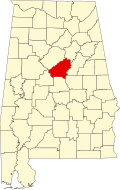
According to the United States Census Bureau, the county has a total area of 1,124 square miles (2,910 km2), of which 1,111 square miles (2,880 km2) is land and 13 square miles (34 km2) (1.1%) is water.[22] It is the fifth-largest county in Alabama by land area.
The county is located within the Ridge-and-Valley Appalachians, with the highest point in the county being found at Shades Mountain, at an elevation of 1,150 ft. Another significant mountain located within the county is Red Mountain, which runs to the south of downtown Birmingham and separates the city from the suburb of Homewood. Many other mountains and valleys make up the majority of the county's diverse geography.[23]
Jefferson County, Alabama – Racial and ethnic composition Note: the US Census treats Hispanic/Latino as an ethnic category. This table excludes Latinos from the racial categories and assigns them to a separate category. Hispanics/Latinos may be of any race.
As of the 2020 census, there were 674,721 people, 274,699 households, and 170,971 families residing in the county.[32] The population density was 607.0 inhabitants per square mile (234.4/km2) There were 307,927 housing units.
As of the 2000 census, there were 662,047 people, 263,265 households, and 175,861 families residing in the county. The population density was 595 people per square mile (230 people/km2). There were 288,162 housing units at an average density of 259 units per square mile (100 units/km2). The racial makeup of the county was 58.10% White, 39.36% Black or African American, 0.21% Native American, 0.90% Asian, 0.03% Pacific Islander, 0.59% from other races, and 0.80% from two or more races. About 1.55% of the population were Hispanic or Latino of any race.
The largest self-reported European ancestries in Jefferson County, Alabama are English 9.7%(64,016), "American" 9.6%(63,015), Irish 8.6%(56,695), German 7.2%(47,690). Many Americans whose ancestors came from Britain or Ireland identify simply as American, because their immigrant ancestors arrived so long ago, in some cases in the 17th and 18th centuries. Demographers estimate that roughly 20–23% of people in Alabama are of predominantly English and related British Isles ancestry.[33][34][35][36] Researchers believe that more of the European-American population has Scots-Irish ancestry than residents identify with today. In addition, many African Americans have racially-mixed ancestry, often with some ancestors from the British Isles. Having been classified in the South as black under racial segregation, some of these families are beginning to use DNA tests to learn about and acknowledge European ancestors. Some identify as multiracial as a result.
There were 263,265 households, out of which 30.80% had children under the age of 18 living with them, 46.10% were married couples living together, 17.20% had a female householder with no husband present, and 33.20% were non-families. Nearly 28.70% of all households were made up of individuals, and 9.90% had someone living alone who was 65 years of age or older. The average household size was 2.45, and the average family size was 3.04.
In the county, 24.80% of the population was under the age of 18, 9.60% from 18 to 24, 29.70% from 25 to 44, 22.30% from 45 to 64, and 13.60% was 65 years of age or older. The median age was 36 years. For every 100 females, there were 89.20 males. For every 100 females age 18 and over, there were 84.50 males.
The median income for a household in the county was $36,868, and the median income for a family was $45,951. Males had a median income of $35,954 versus $26,631 for females. The per capita income for the county was $20,892. About 11.60% of families and 14.80% of the population were below the poverty line, including 20.20% of those under age 18 and 12.70% of those age 65 or over.
Jefferson County is one of the eight counties in Alabama with a limited-form of home rule government. A 1973 Commission had recommended that all counties be granted home rule under the state constitution, but the state legislature has refused to give up its control over local affairs.
In the late nineteenth and twentieth centuries, the county was underrepresented politically for decades into the 1960s because the rural-dominated state legislature refused to redistrict as population increased in urban counties. Changes to county representation in the state legislature did not take place until the state was required to incorporate the principle of one man, one vote from the US Supreme Court decision of Baker v. Carr (1964). It ruled that bicameral legislatures had to have both houses based on population districts, rather than geographic ones. The complexity of Birmingham and Jefferson County urban conditions required more local management, as it was a major industrial center. The county gained some home rule functions by 1944. It allows the county to set up a zoning system for land use, maintain the sanitary sewer, sewerage systems and highways, provide for garbage and trash disposal, and to enforce taxation (except for property taxes).
Today the county has a type of council-manager form of government. It is governed by a five-member commission that combines the legislative and executive duties for the county. The Commissioners are elected from single-member districts. Each county commissioner represents one of the five districts in the county, apportioned roughly equally by population. By votes in the commission, the commissioners are given executive responsibilities for the various county departments, which fall under the categories of "Roads and Transportation", "Community Development", "Environmental Services", "Health and Human Services", "Technology and Land Development", and "Finance and General Services". The County Commission elects a President from among its members, who serves as the chairperson of all County Commission meetings, and who has additional executive duties.
The Commission hires a county manager, who oversees and directs daily operations of county departments.
Sales tax on many items within the county can be as high as 12%. The County Commission approved an educational sales tax by a 3–2 vote in October 2004. This was implemented In January 2005, as a 1% sales tax to support funding for construction of needed education facilities. This additional 1% has resulted in some county municipalities, such as Fairfield, to have sales tax rates as high as 10%, while other municipalities and incorporated communities had an increase in their total sales tax rate from 8% to 9%. The state of Alabama sales tax was 4% at the time and Jefferson County's was 2% in total. Some municipal sales taxes reach 4%.[citation needed]
On March 16, 2011, the Alabama Supreme Court ruled that Jefferson County's 2009 occupational tax law was passed unconstitutionally. This decision dealt a devastating financial blow to a county considering bankruptcy.[38][39]
Jefferson County is served by the Jefferson County Sheriff's Department. The County Sheriff is chosen by the eligible voters in an at large election. The Sheriff's Department fields about 175 deputy sheriffs who patrol the unincorporated areas of the county, and also all municipalities that do not have their own police departments. The Sheriff's Department has two county jails, one in Birmingham and one in Bessemer, which are used to detain suspects awaiting trial (who cannot afford to post bail), and convicted criminals serving sentences less than one year in length.
Two judicial courthouses are located in Jefferson County, a situation dating to when the state legislature was preparing to split off a portion of Jefferson County to create a new county, centered around Bessemer. The city is located about 16 miles to the southwest by car. The split did not take place because the area of the proposed county would have been smaller than the minimum of 500 square miles set forth in the state constitution. The additional county courthouse and some parallel functions remain in service. The main courthouse is in Birmingham and the second one is located in Bessemer. Certain elected county officials maintain offices in the Bessemer annex, such as the Assistant Tax Collector, the Assistant Tax Assessor, and the Assistant District Attorney.
The local jails have a long history of abuse of prisoners. One former jailer, who started work for the Jefferson County Convict Department in 1919, described beatings, the administration of laxatives, and confinement in a tiny two-by-three-foot cell, as well as beatings with rubber hoses. He said, "You can work a man pretty good with a piece of pipe and never mark him."[40] Well into the 1950s, prisoners were regularly beaten and tortured by police to extract coerced "confessions" to crimes.[5]
In mid-2015, the Department of Justice announced an investigation of the conditions imposed on juveniles in the county jail. It said that young people with mental illnesses were locked in solitary confinement for months at a time. Others were housed with adult prisoners who raped them.[41]
In 2010 statistics, the largest religious group in Jefferson County was the SBC Baptists with 185,650 members in 272 congregations, followed by 69,878 non-denominational adherents with 170 congregations, 67,313 NBC Baptists with 117 congregations, 55,083 Catholics in the Roman Catholic Diocese of Birmingham in Alabama with 32 parishes, 43,422 UMC Methodists with 86 congregations, 15,899 CoG–Cleveland, Tennessee Pentecostals with 45 congregations, 14,025 TEC Episcopalians with 17 congregations, 11,267 CoC Christians with 69 congregations, 11,171 CoGiC Pentecostals with 16 congregations, and 9,472 AME Methodists with 42 congregations. Altogether, 83.9% of the population was claimed as members by religious congregations, although members of historically African-American denominations were underrepresented due to incomplete information.[43] In 2014, Jefferson County had 714 religious organizations, the 15th most out of all US counties.[44]
As a reaction to the US Supreme Court's ruling in Brown v Board of Education in 1954, that segregated public schools were unconstitutional, both state and local officials took steps to preserve de facto educational segregation. As late as 1965, schools in the county were still totally segregated. In 1969, public schools in the county became fully integrated.[46]
Except for cities such as Birmingham, that have established their own local school districts, all parts of Jefferson County are served by the Jefferson County Board of Education. Parts within Birmingham are served by Birmingham City Schools.
Beginning in 1959, more wealthy towns, with predominately white populations, began to form their own school systems. Critics allege this served to stymie integration and financially starve schools that served mostly black populations.[47] Cities in the county that have established their own school systems are Gardendale, Bessemer, Fairfield, Midfield, Trussville, Homewood, Leeds, Hoover, Vestavia Hills, Tarrant, and Mountain Brook.[48] The pattern of residential and economic segregation has occurred in many parts of the country, including economic segregation of poorer whites.
Like most urban counties, Jefferson County leans Democratic. It remains the only county in Alabama outside of the Black Belt that votes Democratic. In 2020, Joe Biden received 55.7% of the vote in Jefferson County, the best performance by a Democrat since Franklin Roosevelt in 1944. Before Obama's victory, Jefferson County had last supported the official Democratic candidate for president in 1952, and only once since 1944.
^ abS. Jonathan Bass, He Calls Me By Lightning: The Life of Caliph Washington and the Forgotten Saga of Jim Crow, Southern Justice, and the Death Penalty, Liveright Publishing, 2017
At the 2000 census, there were 257 people, 97 households, and 73 families in the town. The population density was 270.5 inhabitants per square mile (104.4/km2). There were 106 housing units at an average density of 111.6 per square mile (43.1/km2). The racial makeup of the town was 95.72% White, 2.72% Black or African American, and 1.56% from two or more races. 1.17% of the population were Hispanic or Latino of any race.
Of the 97 households 40.2% had children under the age of 18 living with them, 57.7% were married couples living together, 11.3% had a female householder with no husband present, and 24.7% were non-families. 23.7% of households were one person and 7.2% were one person aged 65 or older. The average household size was 2.65 and the average family size was 3.12.
The age distribution was 26.5% under the age of 18, 12.1% from 18 to 24, 31.1% from 25 to 44, 19.8% from 45 to 64, and 10.5% 65 or older. The median age was 33 years. For every 100 females, there were 114.2 males. For every 100 females age 18 and over, there were 110.0 males.
The median household income was $35,625 and the median family income was $37,500. Males had a median income of $28,500 versus $21,250 for females. The per capita income for the town was $13,621. About 13.8% of families and 17.4% of the population were below the poverty line, including 30.4% of those under the age of eighteen and 9.1% of those sixty five or over.